
THE
HARRIET
TUBMAN
OVERGROUND
RAILROAD
PROJECT
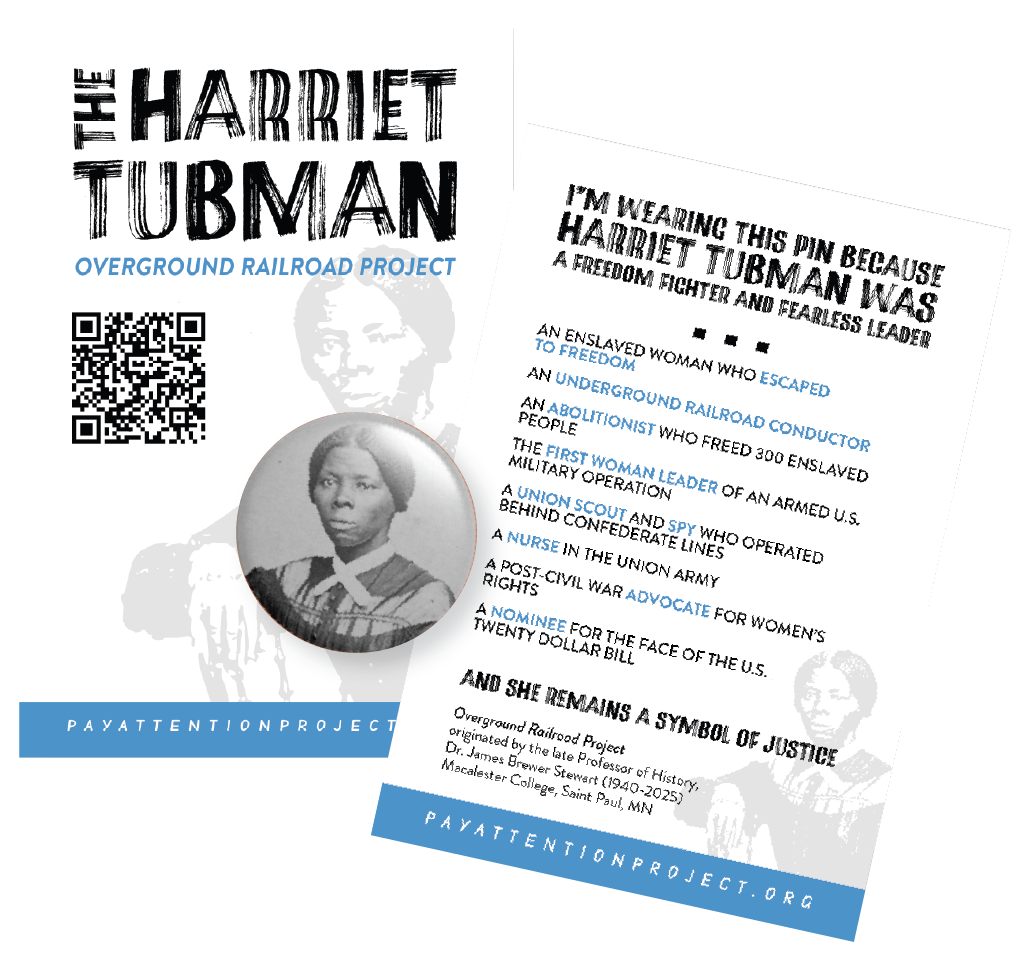
Harriet Tubman was an intrepid “conductor” on the metaphorical Underground Railroad of the 19th century as she guided enslaved people to freedom in the torturous years leading up to the Civil War. Harriet took action for justice again and again in her life and has become a powerful symbol of resistance against oppression for movements advocating racial justice.
The Pay Attention! Project has created the imaginative Overground Railroad movement to demonstrate a modern-day connection to Harriet Tubman as we, too, advocate taking action for racial justice. The face of Harriet Tubman serves as a symbol for the anti-racism work that Pay Attention! seeks to promote.
HARRIET TUBMAN:
THE HERO SHE WAS, THE SYMBOL SHE BECAME
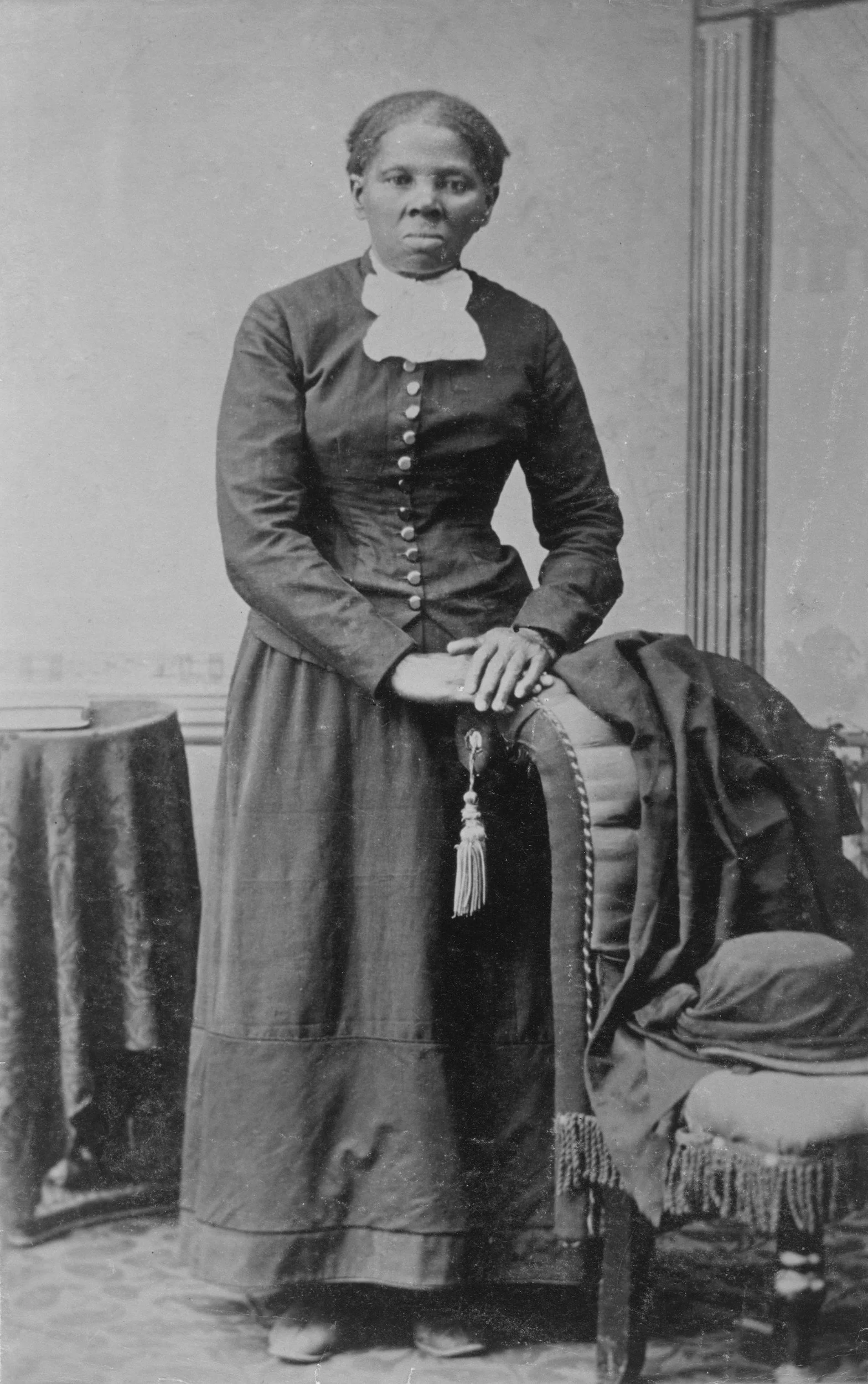
Who was Harriet Tubman? Throughout her life, Harriet Tubman fought relentlessly for freedom — for herself and for others. Her legacy of resilience, bravery, and courage continues to inspire action in the enduring struggle for justice. Read more about her life below.
-
Harriet Tubman is the best known conductor on the Underground Railroad, a network of secret routes, winding through woods and along snake-filled waterways from Southern slave states to Northern free states and Canada. Along these undisclosed trails and routes were privately held “safe houses” — free Black peoples’ and abolitionists’ homes and churches — where runaway slaves could find food, shelter, and protection on their journey. Between 1849 and 1860, Tubman made 13 trips to the South, encouraging and cajoling more than 70 enslaved people to follow her north to freedom.
-
To carry out clandestine rescues of her siblings and elderly parents and numerous other enslaved people, Harriet devised clever strategies that helped her forays be successful. Risky endeavors included:
▶ leaving on a Saturday night, since runaway notices couldn’t be posted in newspapers until Monday morning
▶ appropriating a horse and buggy from the master for the first leg of the journey
▶ using the night sky as a compass, particularly the North Star, as she had no maps
▶ turning abruptly south if she heard slave-hunters’ dogs in the distance, and
▶ carrying a potion to quiet a crying child who might put the runaways in jeopardy.
-
When the Civil War began in 1861, Harriet was confident in her back- country skills and undaunted in leading the Union Army expedition at the Combahee River in South Carolina where she guided Union soldiers in a raid that liberated more than 700 enslaved people and struck at Confederate resources, crippling their ability to wage war. Harriet is widely credited in military history as being the first woman to lead an armed operation for the United States Army. She went on to work valiantly as a spy for the Union behind Confederate lines as well as nursing wounded Union soldiers during the war.
-
Harriet’s incredible backstory reveals that she was born into Maryland slavery about 1822. Working in the fields as a teenager, she suffered a traumatic head injury while attempting to protect another enslaved person from a violent punishment. The painful symptoms remained the rest of her life. In her late twenties, she heard rumors that she and other slaves were going to be sold farther down south. She resolved to run away, setting out alone on foot one night in 1849. On her second escape attempt, she made it to Philadelphia, found work, saved her wages, and plotted her stealthy returns to slave country to lead others to freedom.
-
Harriet was tough and fiercely determined. She carried a gun for protection and to ‘buck-up’ her fugitives if they became tired or scared on the long journey, telling them: “Be free or die.” She proudly told her friend Frederick Douglas that she “never lost a single passenger in all my journeys.” He, in turn, called her the “bravest person on this continent.”
Harriet became known as “Moses” to her people for leading them out of slavery to a land of freedom.
“I WAS THE CONDUCTOR OF THE UNDERGROUND RAILROAD FOR EIGHT YEARS, AND I CAN SAY WHAT MOST CONDUCTORS CAN’T SAY — I NEVER RAN MY TRAIN OFF THE TRACK AND I NEVER LOST A PASSENGER.”
~ Harriet Tubman
THE HARRIET TUBMAN
OVERGROUND RAILROAD PROJECT
In the years leading up to the Civil War, Harriet Tubman carried out racial justice work as a fearless conductor on the Underground Railroad. The Underground Railroad operated secretly in whispers, in the dark of night, enabling enslaved people to flee bondage. The Underground Railroad lived in the shadows — always fearful of discovery, exposure, and the fierce teeth of the slave-catcher’s dog.
As a symbol of contemporary racial justice work, Pay Attention! founder Jim Stewart imagined the idea of a modern Overground Railroad movement. In contrast to the metaphorical Underground Railroad of the 19th century, the Overground Railroad of the 21st century stands fully emerged in the light of day — imploring, advocating, and shouting “make racial justice real!” The contemporary Overground Railroad represents the focused and dogged anti-racism work that the Twin Cities and our country so desperately need.
Pay Attention! draws inspiration from Harriet Tubman’s example and encourages individuals and communities to become informed, recognize racial injustice, and take meaningful action. This is the work of the Pay Attention! Project — we invite you to join us.
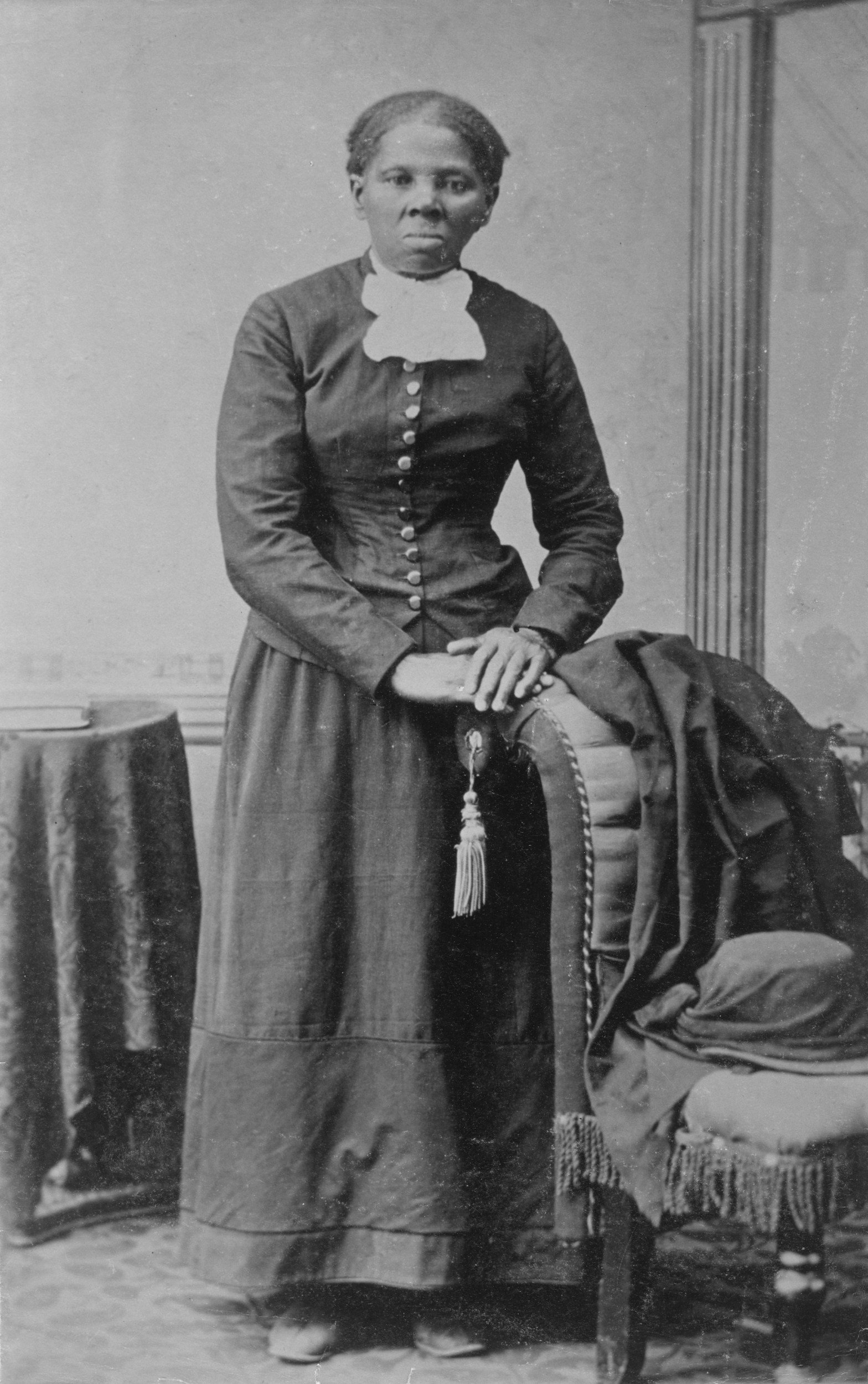
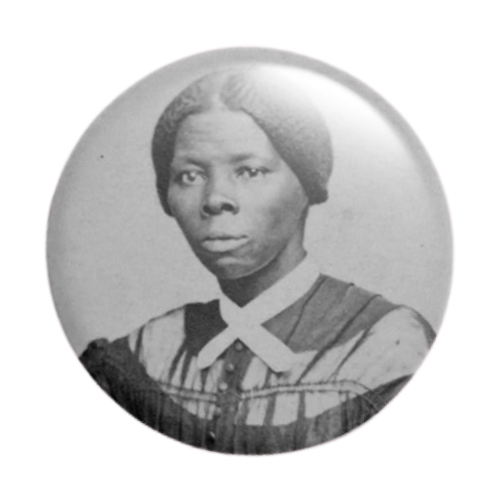
For years before Jim Stewart thought of the Pay Attention! Project, he was always seen wearing a small Harriet Tubman pin on his shirt or lapel. He was a big admirer of Harriet, believing that she symbolizes taking action against injustice. Jim often said that the pin was a conversation-starter wherever he went. It signaled to the world that he was an anti-racist person.
Wearing a pin with Harriet Tubman’s face demonstrates a commitment to justice — a readiness to roll up one's sleeves and do the work necessary to advance equality and goodwill in the world.
You and those in your sphere of influence can become part of the Overground Railroad Project by wearing a Harriet Tubman pin!
ACQUIRING HARRIET TUBMAN PINS
To order Harriet Tubman pins from Pay Attention! for yourself, your family, your classroom, your church group, your scout troop, your teen center, your student union, your work team, your senior community, etc., contact us at: payattnproject@gmail.com. Included with each pin is a bookmark with highlights of Harriet Tubman’s life.
WEAR A
HARRIET TUBMAN
PIN